|
|
Microscope Museum Collection of antique microscopes and other
scientific instruments |
|
|
|
|
|
Microscope
145 (Carl
Zeiss; stand III B; c. 1915)
In
1846, Carl Zeiss opened a workshop for precision mechanics and optical
instruments in Jena. He focused his activities more and more on microscope production.
Soon he was supplying not only the regional market but also shipping his
wares around the world. In 1866, Carl Zeiss recruited the physicist Ernst
Abbe to help him improve his microscopes. In 1877, Ernst Abbe became a
partner in the company. After the passing of Carl Zeiss in 1889, Ernst Abbe
created the Carl Zeiss Foundation, which would become the company’s sole
owner. Since the 1890s, Abbe’s findings and his style of working have also
been adopted in other fields of optics. This led to the creation of all-new
products, new business areas and rapid growth for the company. In 1893, the
first subsidiary was opened in London. Before the outbreak of WWI, sites were
established across the world, which then had to be closed when war broke out.
There were more ups and downs between then and 1945. Thereafter, the sites
outside Germany have been developing in a stable manner and today, Carl Zeiss
AG is a holding company with several subsidiaries. In addition to its sites
in Oberkochen and Jena, its main production sites are in Wetzlar and
Göttingen in Germany, Dublin and Minneapolis in the US, and Shanghai in
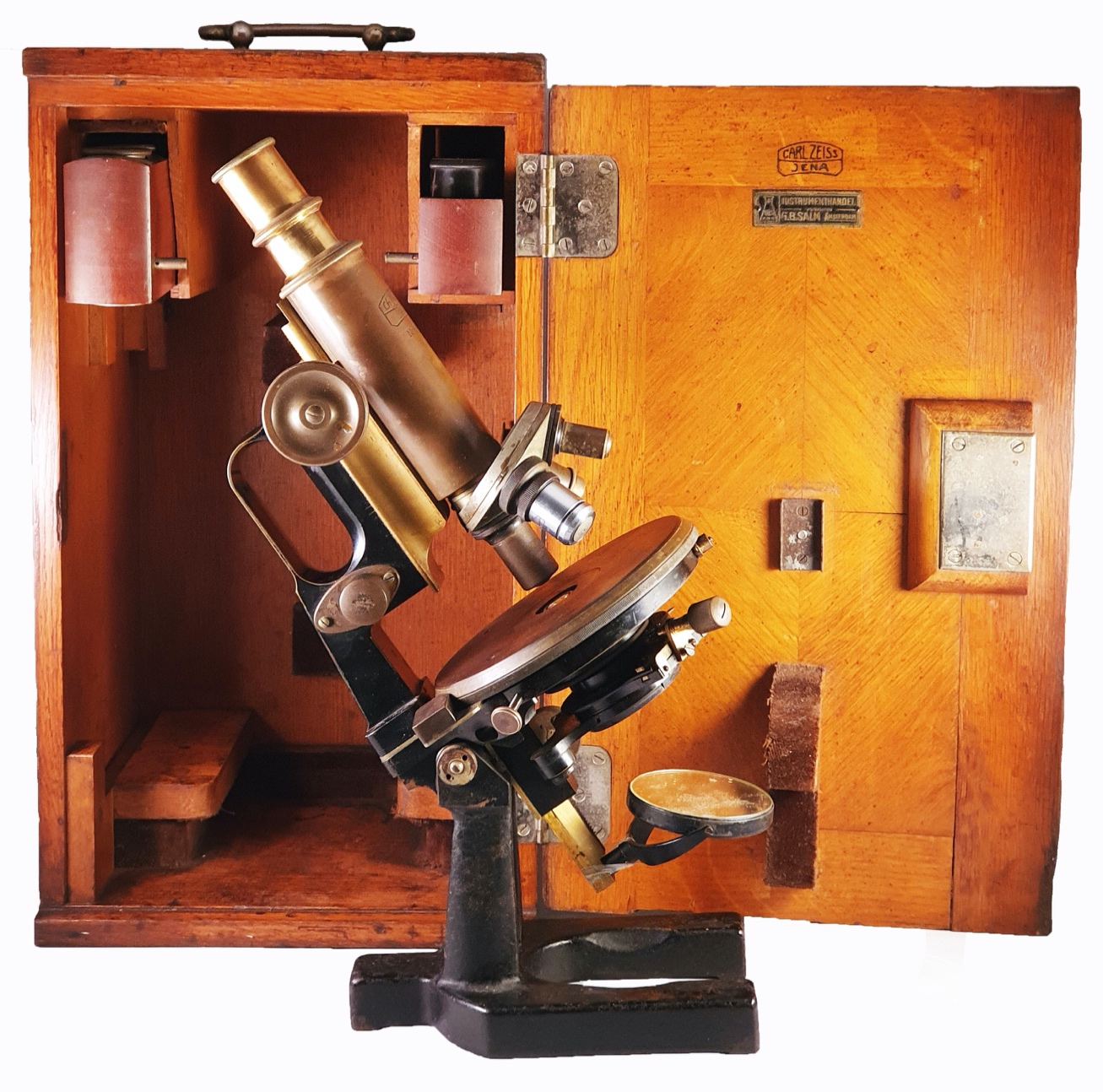
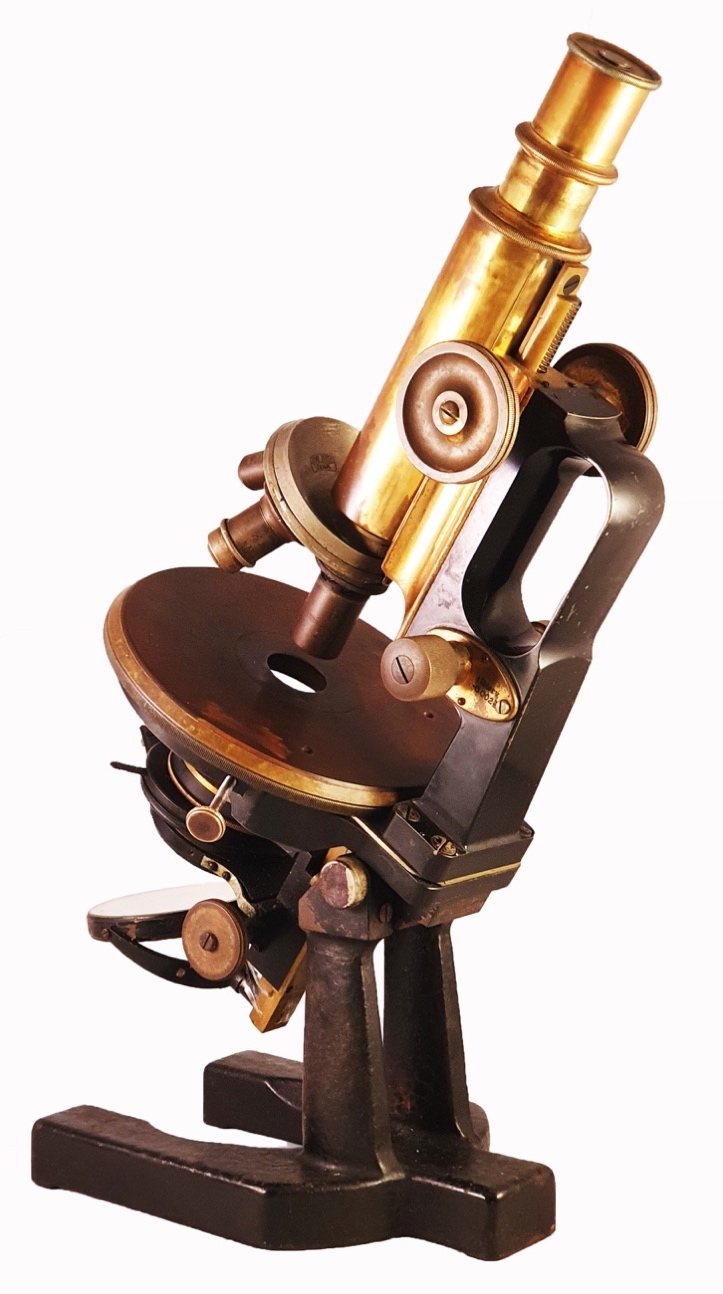
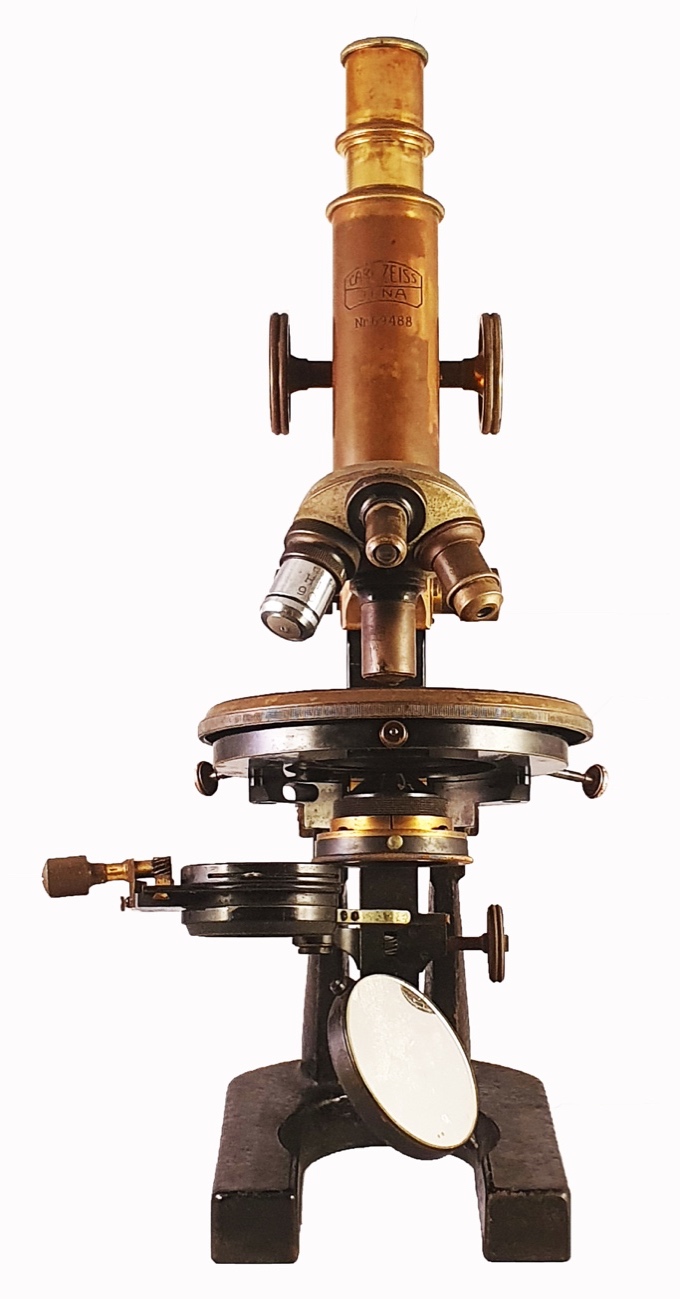
China. Microscope 145 is a Carl Zeiss stand III B microscope, with the serial
number 69488. This instrument is dated to c. 1915. Stand III microscopes were
large inclinable stands (Figure 1). The body frame, which carries the tube
and focussing mechanisms, is fashioned in the form of a handle for carrying
the microscope. According to the seller, this instrument was originally found
in a skip, together with other antique materials belonging to the University
of Sheffield.
Figure
1.
Carl Zeiss
stand III B microscope as engraved in the company’s 1913 catalogue. |